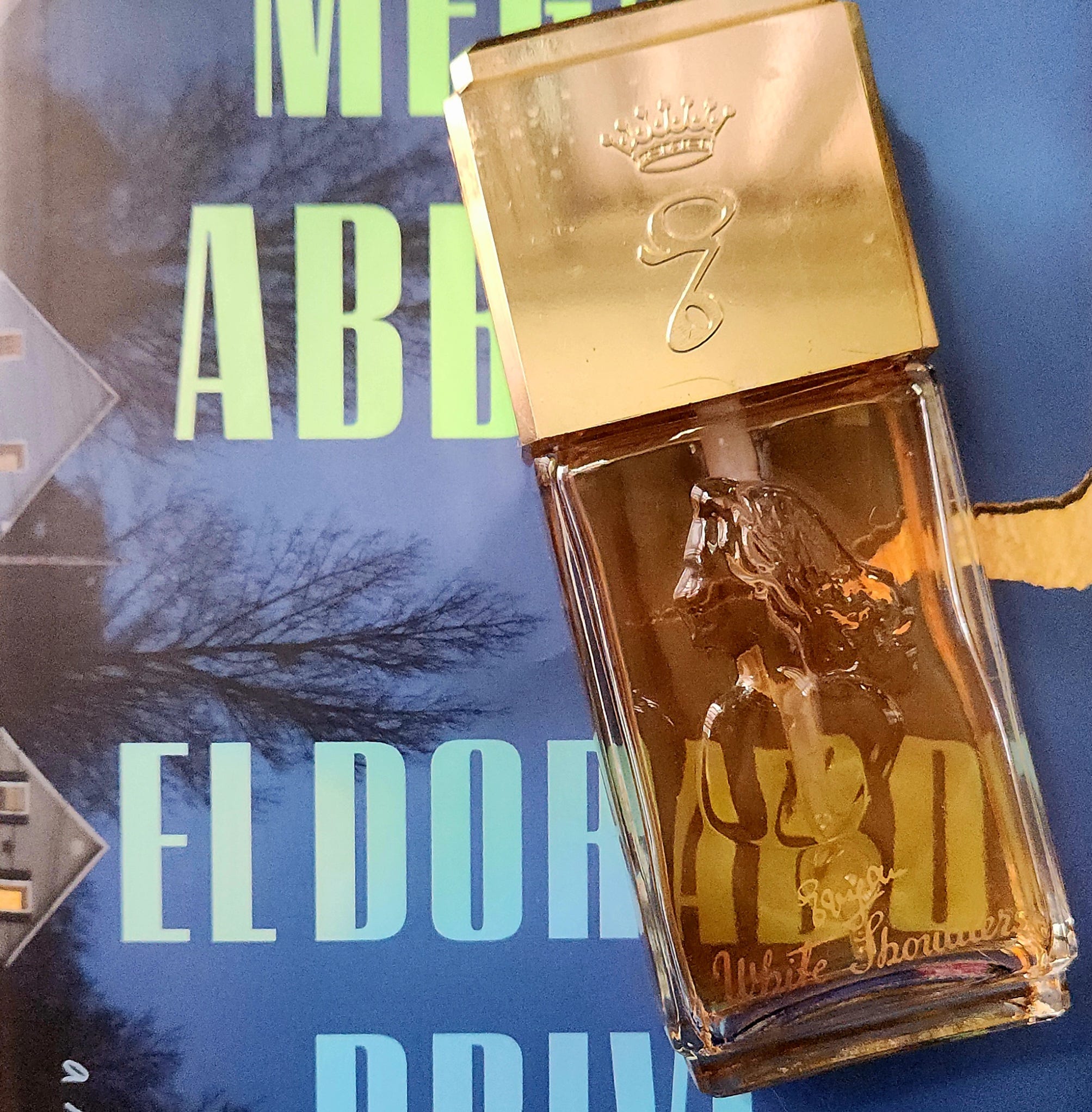
Who knew that crime could sometimes smell like tuberose?
That’s a paraphrase of a line from the movie Double Indemnity (1944): “How could I have known that murder could sometimes smell like honeysuckle?”
I’m sure author Megan Abbott could quote that line as well, since she’s an expert on film noir and pulp fiction. She also works a fascinating range of scent references into her novels, from specific perfume mentions to overall olfactory ambiance. I wrote an Instagram post about a scent detail in The Turnout about two years ago, and I’ve just finished reading her latest book, El Dorado Drive, and was delighted to notice several references to fragrance and cosmetics in this one as well. (I’ll avoid any spoilers!)
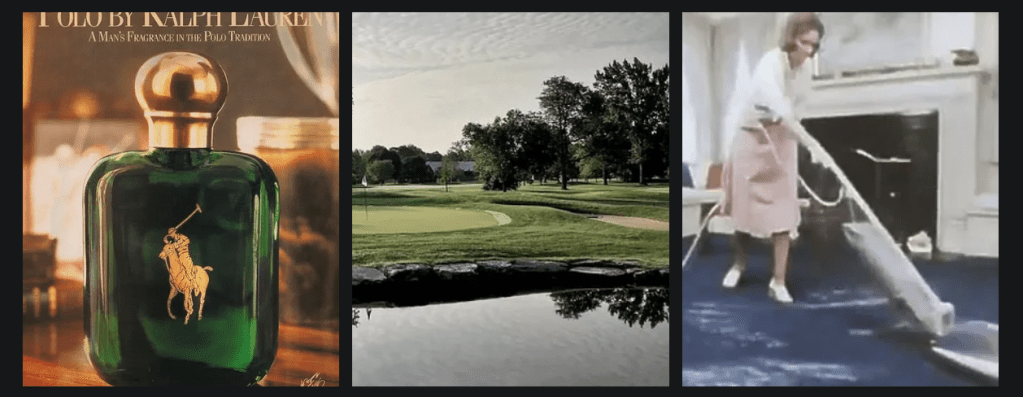
“The house smelled like fairway dew, Polo cologne, carpet cleaner. Like their own childhood, long gone, all gone.”
El Dorado Drive takes place in the affluent Detroit suburb of Grosse Pointe, Michigan and revolves around a trio of main characters: three sisters who grew up in a preppy paradise of country clubs and Pappagallo belts, only to watch their comfortable life crumble when their father loses his high-level position with General Motors, then dies in a drunken accident. Their mother struggles to keep the family afloat, and two of the daughters marry successful men who are able to provide them with lifestyles similar to their upbringing—until 2007, when the Great Recession, and divorces and illness and other family matters, cause everything to grind to a bankrupt halt for the Bishop sisters.
This novel is a page-turner. It’s also a story about sibling dynamics, and the indelible (and often unreliable) memories of happier times and lost relationships, and money’s fraught symbolism as an element of independence, security, power, and privilege. It is, in Megan Abbott’s own words, “a book centering on women wanting things.”

El Dorado Drive’s narrator, Harper Bishop, brings a middle child’s observant eye to the proceedings even as she struggles with her own heartbreak and debts. She doesn’t often wear makeup, but she pulls out some nearly forgotten Clinique products to get ready for her first-time visit to the Wheel, a women’s-empowerment social club (and multi-level financial scheme) that has enveloped her sisters and many of their female acquaintances.
Harper’s younger sister, Pam, also wears Clinique, and many of the other women in their circle seem to have a fondness for Elizabeth Arden skincare. I had to stop and think for a minute about these brands, since they’re not particularly high-end or “aspirational.” Then again, we’re dealing with a very particular demographic here: forty-something WASP women, in the 2000s, who are emulating their mothers’ style and are probably somewhat trend-averse. Twenty years ago, cosmetics counters offered a more limited selection than they do today (not a bad thing, upon reflection) and online shopping was still a relatively new phenomenon. Clinique was a safe, time-tested choice. Plus, Arden was actually riding high at the time, thanks to Catherine Zeta Jones’s celebrity endorsement and a new advanced anti-aging line.
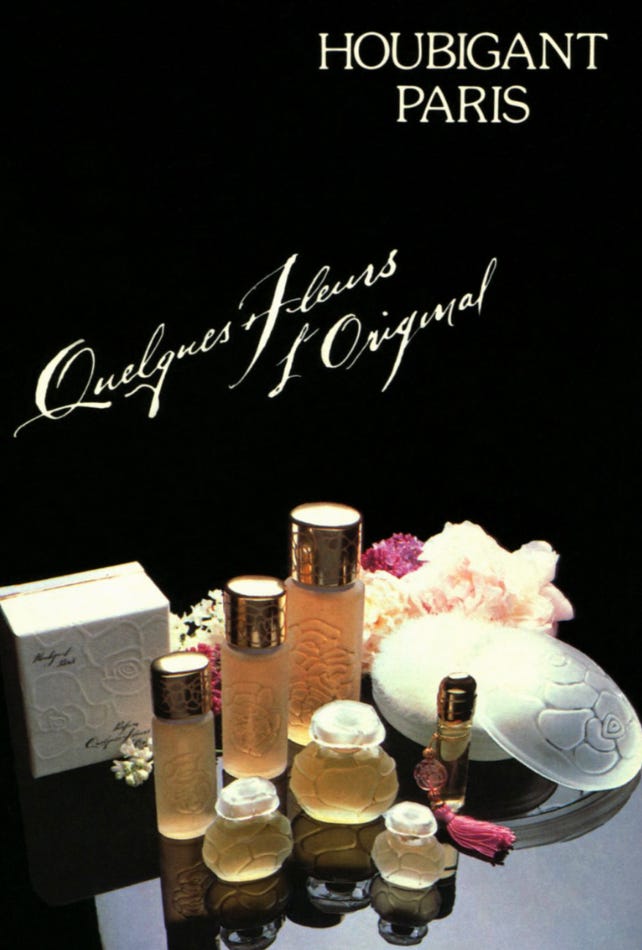
The most flagrantly fragrant character in the novel is Sue Fox, the hard-edged queen bee of this social circle and the founding member of the Wheel, a Junior Leaguer “who drove a paprika-colored Mercedes and showed off her backhand every Sunday at the Hunt Club, shimmying around the courts in her Lacoste tennis skirt.” When Harper runs into her at a local department store, their first encounter in many months, Sue approaches her in “a cloud of Houbigant.” Megan Abbott doesn’t specify, but I’m thinking of the classic Quelques Fleurs (Robert Bienaimé, 1912), a lush, aldehydic bouquet of white floral notes.
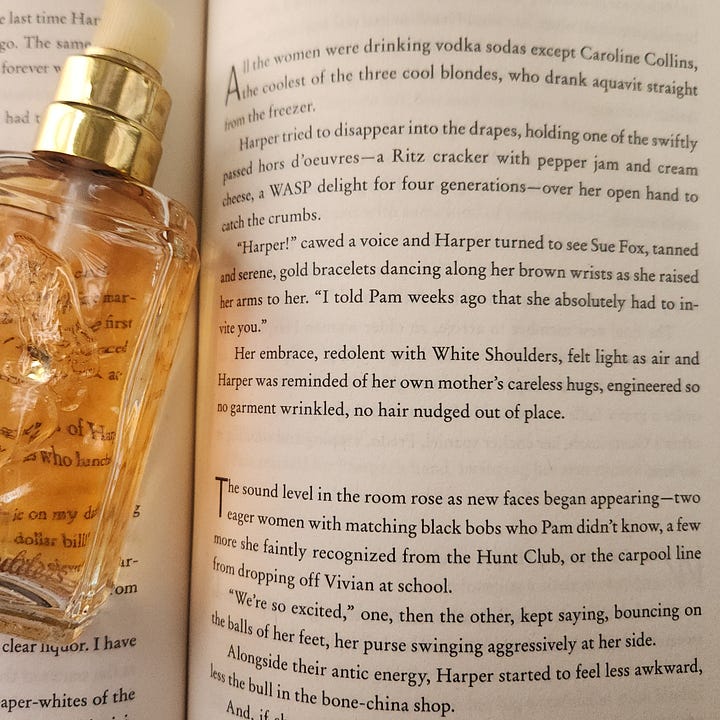
A few weeks later, at the Wheel meeting, Sue Fox gives Harper a welcoming embrace “redolent with White Shoulders,” and that’s another big white floral. It was released during the World War II era and has stayed in production, against all odds. Towards the end of the novel, Sue is still trailing “the cloying smell of tuberose.” It could be either Quelques Fleurs or White Shoulders…or maybe (I’m just fantasizing here!) she has gone more avant-garde and splurged on a bottle of Editions des Parfums Frédéric Malle Carnal Flower (Dominique Ropion, 2005)? I’m not sure, however, whether Malle was available in Detroit in 2007-2008. Possibly not…
I wonder what kinds of perfumes the other women in the Wheel are wearing. They’re probably leaning, like Sue, towards the classics that their mothers wore for nights out and special occasions…Guerlain Shalimar, Chanel No. 5, Nina Ricci L’Air du Temps. They love Burberry purses, so maybe they’re sampled the latest Burberry fragrances at Grosse Pointe’s various shopping centers. Perhaps they’ve dabbled in Dior Pure Poison or Narciso Rodriguez For Her or even something from Creed—expensive, even in the 2000s, but with their newfound gains from the Wheel, they can afford it.
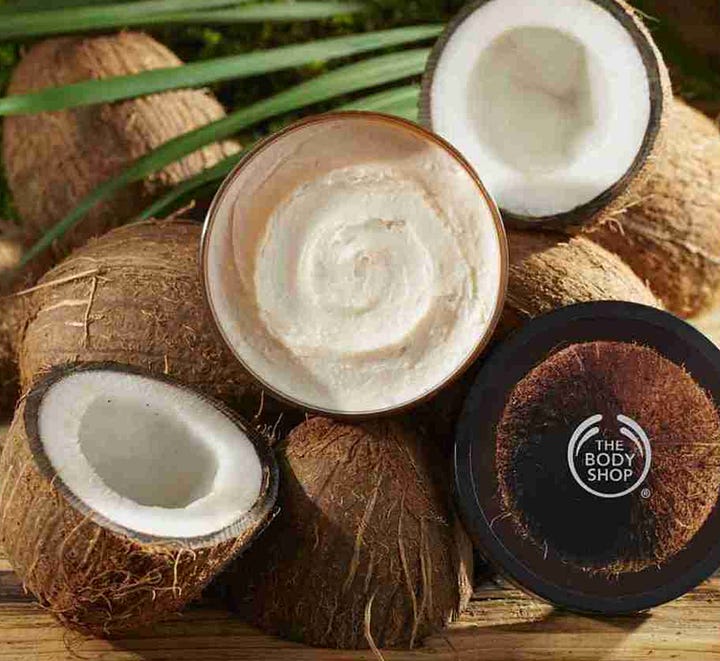
Harper’s own memories include late-night dorm-room visits from sorority pledges who’d “get under Harper’s covers, so soft, like kittens, so sweet they’d hurt your teeth. In the morning, Harper’s pillow always smelled like coconut.” I’m thinking of tanning salon products with coconut scents, or “tropical”-smelling drugstore shampoos and conditioners, or the iconic Coconut Body Butter from The Body Shop.
Some of those girls swipe items from Harper’s room—a fleecy sweatshirt, a tank top, her equestrian breeches. (She’s a skilled horsewoman.) “It smells like you.” Harper jokes, “Like barn?” but she’s aware of her power over these other women.
In the present-day main plot, teenagers are still drawn to Harper, seeing her as a confidante. Her niece Vivian’s girlfriend, Cassie, gets into Harper’s car for an urgent conversation in a late chapter of the novel, and Harper registers Cassie’s “flutter of nerve and spirit. The giddy sugared Bath & Body works smell.” I’m trying to think back to the popular B&BW scents of the late 2000s; one of my own favorites was Rainkissed Leaves, and I loved Butterfly Flower, but I’m picking Blackberry Amber, Warm Vanilla Sugar, or Sparkling Peach for Cassie.
The Bishop sisters’ conversations about their lives, past and present, often bring up memories of their mother. Harper, contemplating her entry into the Wheel’s financial network, remembers “their own mother, who wouldn’t have deigned to touch a vomit-pink Mary Kay eye palette, or Avon perfume in a bottle shaped like a cat”—but times have gotten even harder, and the sisters need to do what they need to do.
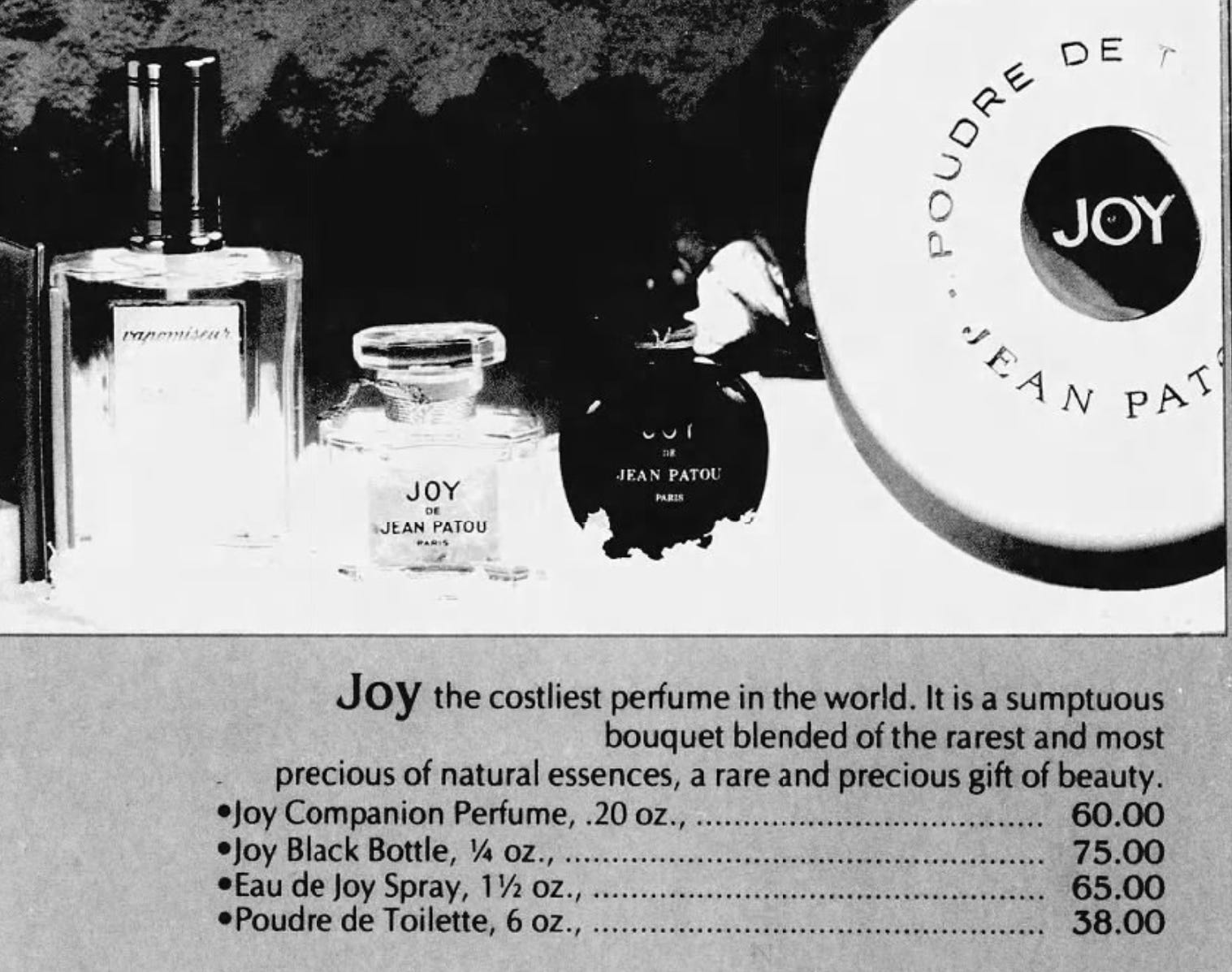
Although Pam is unemployed and raising two children as a divorced mother with an alimony-avoiding ex-husband, the Wheel has allowed her to make some unexpectedly glamorous purchases. Daughter Vivian is giving side-eye to this sudden bout of extravagance: “Did you see the perfume she just bought? Did you know it’s the most expensive perfume in the world?”
And here we have a guest appearance by Jean Patou Joy, in its hard-to-find black bottle with elegant gold lettering. (The motif of this precious metal runs throughout the novel like a glittering vein.)
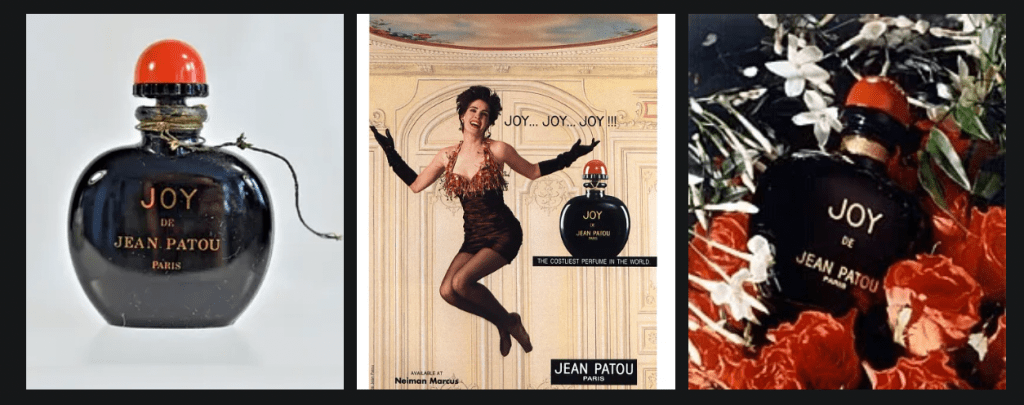
Pam has purchased Joy for the deepest of sentimental reasons: it reminds her of their mother and the lost era of their (somewhat) more innocent childhood. Questioned by Harper, she reaches into one of her dresser drawers to reveal the coveted object.
“…she plucked out a curvy black bottle the size of a small peach, a tiny gold cord around the top. . . . the red plastic stopper that, when they were little, looked like a cherry atop a sundae.
‘It was supposed to look like a Chinese snuff bottle,’ Pam said. “We looked up snuff in the encyclopedia.’
She plucked the cherry off the top and took Harper’s wrist in her hand, dabbing the stopper on the inside.
The scent, like a storm.”
That scene continues, but I’ll allow you to read it for yourselves…
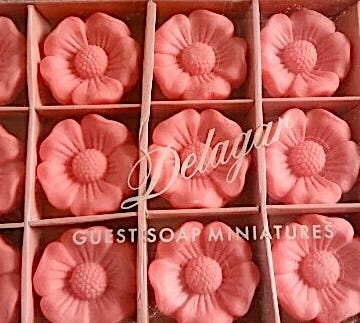
I asked Megan whether she could recommend any further olfactory accompaniments for reading El Dorado Drive, and in addition to a classic tuberose fragrance “like the perfumes my mom and her friends wore,” she mentioned the memory of the “little pink soaps in the powder room.” Some of us probably remember those “guest soaps” or “hostess soaps” from our own pasts, whether we’re thinking of our own homes or houses we visited.

She also suggested picking a drink to match the copious imbibing that takes place in the novel, perhaps a gin and tonic—they’re WASPS, so there’s a lot of gin, she joked. True! I came across mentions of martinis, Tanqueray with Ocean Spray cranberry juice, and more, plus other “clear”-liquor cocktails like vodka and soda, in every party scene and many quieter sister-to-sister chats.
Pour yourself a sip of your choice (even a mocktail), spray on some Fracas, and buckle up for this ride along the fictional El Dorado Drive. I’ll see you soon at the club.
 PERFUME PROFESSOR (